The Tokyo National Museum samurai armor display — "Arms and Armor of the Samurai" in the Honkan gallery, Ueno — is Tokyo's best collection of original yoroi armor, kabuto helmets and National Treasure swords, included in the standard ¥1,000 admission.
Key takeaways
- The permanent Arms and Armor of the Samurai rooms cover the 12th–19th centuries — original armor, helmets, sword mountings and blades, rotated regularly for conservation.
- Admission ¥1,000; free for 17-and-under and 70-and-over. Hours 9:30–17:00, later on some Fridays/Saturdays; closed Mondays.
- This is a viewing museum — everything original, nothing touchable. The interactive counterpart is the Samurai Ninja Museum in Asakusa (from ¥3,000), 15 minutes away.
- The classic pairing: original armor in Ueno in the morning, then wear armor and swing a katana in Asakusa after lunch — both for under ¥10,000 total per adult.
- The Shinjuku Samurai Museum, the old third option for antique armor, has been closed since January 2022.
- Budget 60–90 minutes for the samurai rooms; the Honkan around them is Japan's largest art museum if you have more time.
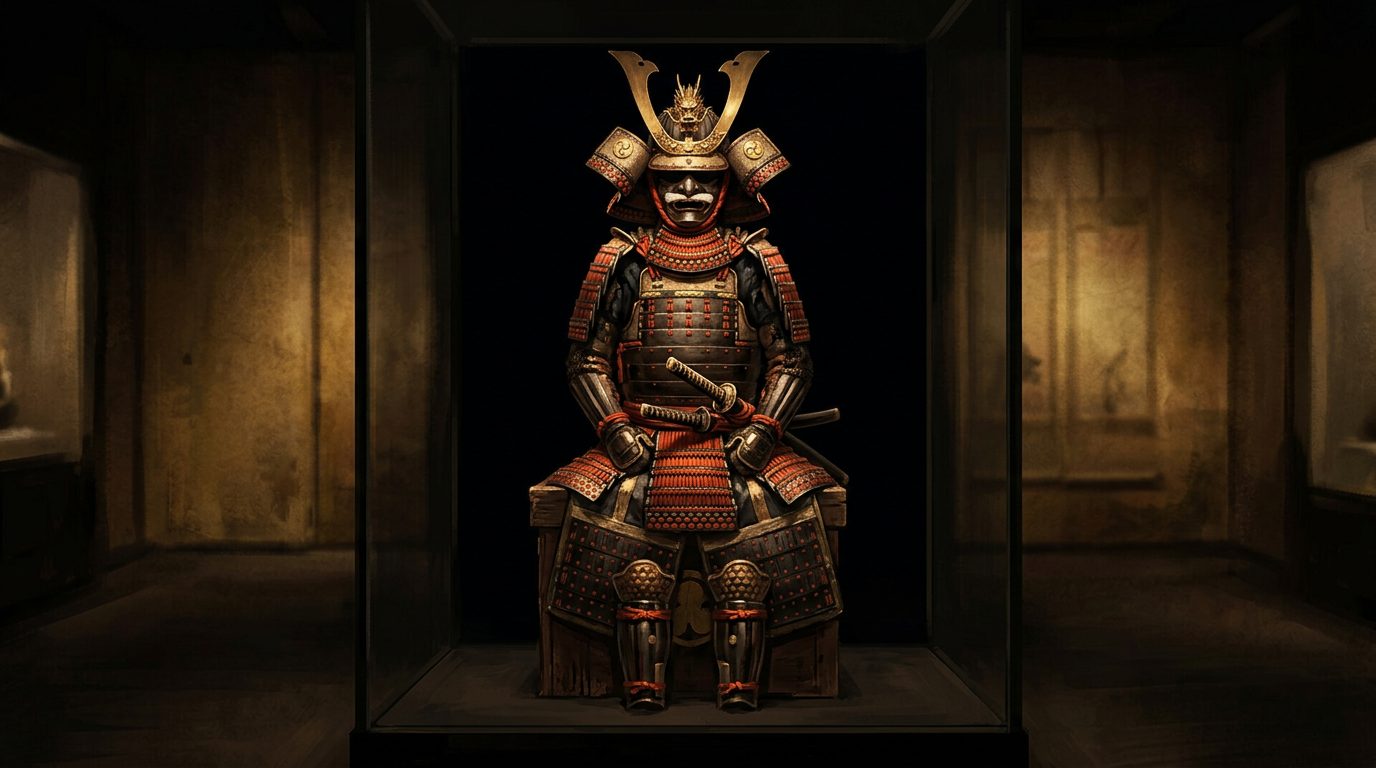
What samurai armor does the Tokyo National Museum actually show?
The Honkan — the museum's main Japanese Gallery — dedicates rooms to "Arms and Armor of the Samurai", tracing warrior equipment from the 12th to the 19th century: great-armor (ō-yoroi) of the mounted-archery age, the practical tōsei-gusoku of the Sengoku battlefield, kabuto helmets with their crests, sword mountings, and blades up to National Treasure grade. Displays rotate for conservation, so two visits a year apart won't show identical pieces — the museum's exhibition pages list what's currently out.
This is the collection the word "museum" normally promises: original objects, scholarly labels in English, glass between you and eight hundred years. JNTO highlighted the museum's armor programming for good reason — nothing else in Tokyo matches its depth. For the story behind the objects, start with our primary-source history of the samurai and shinobi.
How much does it cost and when should you go?
Standard admission is ¥1,000 — the permanent samurai rooms are included, no timed ticket needed. Visitors 17 and under and 70 and over enter free. Hours run 9:30–17:00, stretching to 19:00–20:00 on some Fridays and Saturdays; the museum closes Mondays (or Tuesday after a Monday holiday). Mornings right at opening are the quiet window; the armor rooms are compact and crowd quickly when tour groups land mid-morning.
Viewing or doing — which samurai museum should you prioritize?
They answer different questions. Ueno shows you what samurai equipment actually was; Asakusa shows you what it felt like. One displays a 14th-century kabuto; the other puts a replica on your head and hands you a katana with an instructor attached. Our comparison of all four Asakusa tickets is on the experiences page, and the pricing breakdown here.
| Tokyo National Museum (Ueno) | Samurai Ninja Museum (Asakusa) | |
|---|---|---|
| What it is | Original artifacts, 12th–19th c. | Interactive experience museum |
| Price | ¥1,000 (under-18 free) | From ¥3,000 |
| You can | See National Treasure swords | Wear armor, throw shuriken, take a sword lesson |
| Time | 60–90 min for the samurai rooms | 60–120 min by ticket |
| Closed | Mondays | Open daily |
The two sit 15 minutes apart, which makes the combined day trivially easy: Ueno at 9:30 opening, lunch around Ueno or Asakusa, museum slot at 13:00–14:00. Total cost per adult: ¥4,000 for both, less than a single themed dinner show. Families should note the Asakusa side has the kid-specific programming; the National Museum is free for their kids but offers them nothing to do with their hands.
How did we verify what's on display?
Facts on this page come from the Tokyo National Museum's own exhibition listings and admission pages (tnm.jp, checked June 2026) and JNTO's official coverage. Asakusa prices are live GetYourGuide rates. We earn a commission on experience bookings made through our links — never on National Museum tickets, which we don't sell — full disclosure.
FAQ
Seeing real armor — frequently asked questions
Where can I see real samurai armor in Tokyo?+
How much does the Tokyo National Museum cost?+
What are the Tokyo National Museum's hours?+
Is the samurai armor exhibit included in basic admission?+
Can you try on armor at the Tokyo National Museum?+
How long should I budget for the samurai galleries?+
Are photos allowed in the armor galleries?+

See It, Then Wear It
Original armor in Ueno, hands-on samurai in Asakusa — 15 minutes apart. Book the interactive half ahead.
Book the Asakusa Museum from $23 →